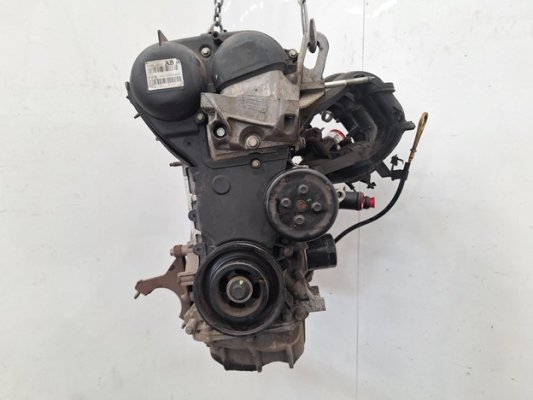
Swapping or replacing a Ford Fiesta engine is a proven way to extend vehicle life or upgrade performance, but it demands technical precision. Whether you're dealing with engine damage or planning an upgrade, understanding compatibility, costs, and complexity is essential before starting. At Trents, we process and supply a wide range of engines, supporting both DIYers and independent garages with fitment advice and tested Green Parts. This guide consolidates our hands-on expertise to help you navigate the complexities of Fiesta engine swaps—what fits, what works, and what to avoid.
Key Takeaways
- Always match engine code, model year, and gearbox before buying a replacement.
- Like-for-like swaps are the simplest and most cost-effective option.
- Popular upgrades (e.g. 1.7 Puma, 2.0 Focus) require additional modifications.
- Labour and ancillary costs often exceed the engine price itself.
- Wiring, ECU compatibility, and mounts are the most common failure points.
- Professional help is strongly recommended for complex swaps.
Understanding Engine Compatibility
Correct compatibility is critical for any Ford Fiesta engine replacement. Each generation (Mk4, Mk5, Mk6, Mk7) has different:
- Engine bay layouts
- Mounting positions
- Wiring looms and ECUs.
Even small differences can result in fitment issues, electrical faults, or MOT failures.
The safest approach is to match:
- Engine code
- Model year
- Gearbox type.
Trent’s team routinely assists with compatibility checks before recommending an engine swap. If you're unsure, it’s worth checking available stock and seeking professional advice in comparing your vehicle specifications before purchasing.
OEM vs Non-OEM Engine Options
OEM (Original Equipment Manufacturer) engines—from Ford or direct Ford partners—are the most straightforward swaps. They offer direct fitment, reliable compatibility, and easier MOT and insurance compliance. Used or reconditioned OEM units, often referred to as “Green Parts,” are a cost-effective and sustainable choice offering strong value if properly tested.
Non-OEM engines—from other manufacturers—are technically possible but rarely practical for Fiestas. These swaps often require custom mounts, standalone ECUs, and significant fabrication. Even with expertise, non-OEM swaps risk insurance complications and legal hurdles. They’re typically reserved for track builds or specialist conversions, not daily road cars.
Comparative summary of options:
| Option | Pros | Cons | Typical Use Case |
|---|---|---|---|
| OEM | Direct fit, proven reliability, easier MOT/insurance | Limited to Ford engine range, may cost more new. | Road cars, daily drivers |
| Non-OEM | Unique performance, customisation | Complex fitting, wiring, possible legal/insurance complications | Track cars, show builds |
Key Fitment Factors: Mounts, Wiring, Transmission
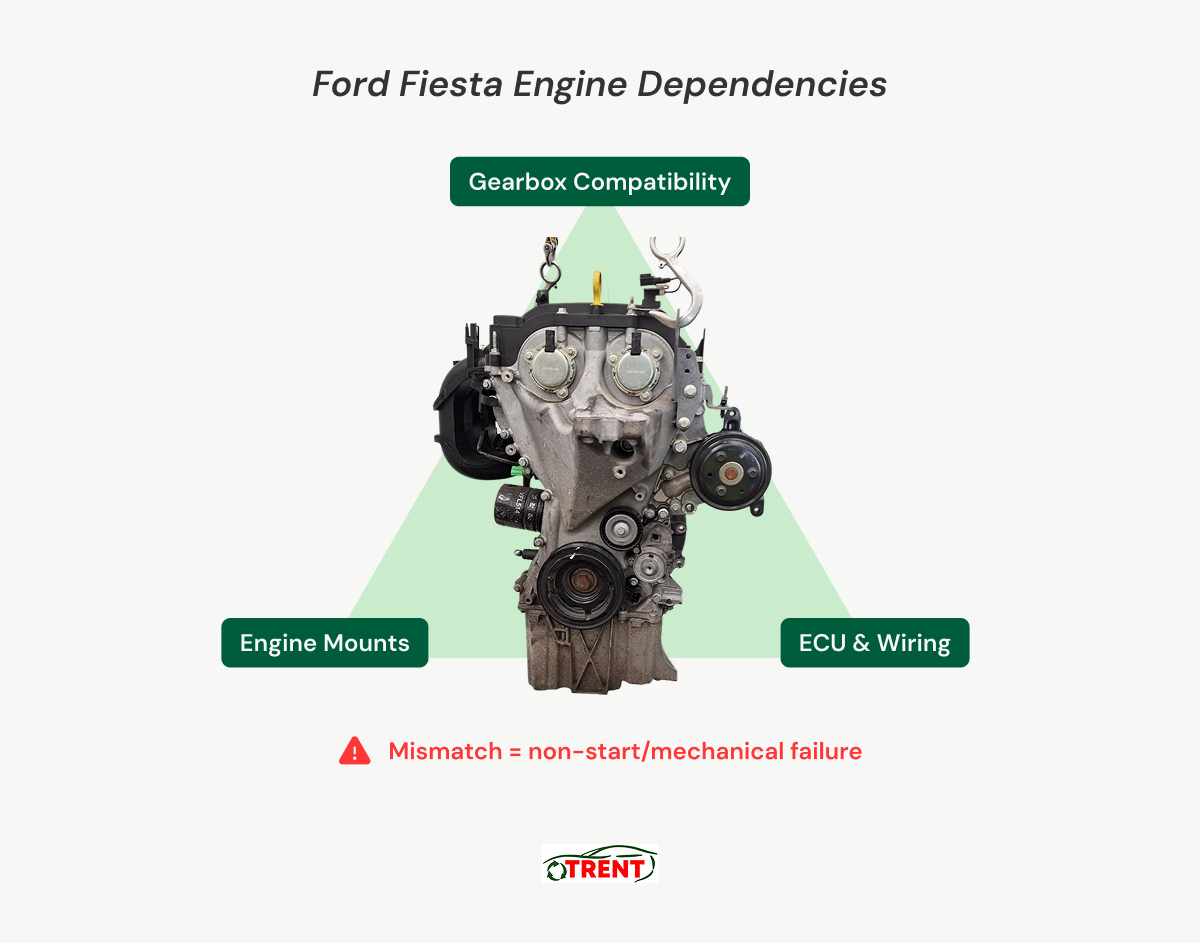
Three areas determine whether a Ford Fiesta engine swap will work:
1. Engine Mounts
Mounting points must align with the subframe and bay layout. Even small differences in mount position or bracket design can require custom fabrication.
2. Wiring Loom & ECU
Modern engines rely heavily on electronics. The engine’s sensors, injectors, and management system must integrate with your Fiesta’s loom. Swapping between engine families (e.g., Zetec to EcoBoost) usually means loom and ECU changes. Mismatched looms can cause:
- Non-start issues
- Dashboard warning lights
- Immobiliser conflicts.
3. Gearbox Compatibility
The gearbox bellhousing, driveshafts, and clutch/flywheel must match the new engine’s:
- Bellhousing pattern
- Clutch and flywheel
- Driveshaft alignment.
If any of the above are mismatched, you may need the donor vehicle’s gearbox or additional modifications.
Skipping checks in any of these areas is the fastest route to a failed swap.
Popular Engine Swap Options
Based on commonly used swaps in the UK market, several engines stand out as proven swap candidates for the Fiesta platform. These swaps are among the more commonly discussed and attempted due to availability, performance gains, and relatively well-understood and manageable fitment requirements:
1.7L Ford Puma (Zetec-SE)
- Best suited for Mk4/Mk5
- Lightweight and responsive
- Often requires ECU and loom matching
- Cooling upgrades recommended.
2.0L Ford Focus (Zetec-E)
- Popular for Mk6/Mk7 upgrades
- Significant power increase
- Driveshaft and exhaust work often required
- Requires custom mounts and loom modifications
- Usually requires a Focus gearbox.
EcoBoost Engines (1.0 / 1.6 / 2.0)
- Modern performance and efficiency
- Turbocharged options for Mk7 onwards
- Complex installation
- Requires full ECU, loom, and immobiliser integration
- Cooling, fuel, and exhaust upgrades needed.
Ford Fiesta Engine Replacement Cost (UK)
The cost of replacing a Ford Fiesta engine in the UK varies depending on the type of job, affected by engine choice, vehicle generation, and whether you tackle the job yourself or use a professional.
Typical Cost Breakdown
| Swap Type | Engine Cost | Labour (Pro) | Extras | Total (DIY) | Total (Pro) |
|---|---|---|---|---|---|
| Like-for-like replacement | £400–£700 | £500–£900 | £150–£300 | £550–£1,000 | £1,050–£1,900 |
| 1.7L Puma swap | £500–£800 | £700–£1,200 | £300–£600 | £800–£1,400 | £1,500–£2,600 |
| 2.0L / EcoBoost swap | £700–£1,200 | £1,000–£1,500 | £500–£1,000 | £1,200–£2,200 | £2,200–£3,700 |
These figures reflect typical UK pricing and may vary depending on condition and labour rates. Advanced swaps requiring custom wiring, mapping, or fabrication can exceed these ranges.
Ford Fiesta Engine Supply and Fit
A Ford Fiesta engine supply and fit service usually includes:
- Sourcing a compatible engine
- Installation and labour
- Basic testing and setup.
This is often the safest route for non-mechanical owners, especially where wiring or ECU work is involved.
When to Seek Professional Help
- Complex wiring or ECU integration: Modern EcoBoost or cross-model swaps often need specialist knowledge and diagnostic tools.
- Fabrication: Custom mounts, exhaust routing, or gearbox adaptation should be left to experienced fabricators.
- Tuning and mapping: Any turbocharged or heavily modified engine must be mapped by a professional to avoid engine damage.
If in doubt, consult a garage with proven Fiesta swap experience.
Engine Rebuild vs Replacement
In some cases, rebuilding your existing engine may be an option.
Ford Fiesta Engine Rebuild Cost
- Typically £800–£2,500 depending on damage
- Suitable for minor internal issues
- Less viable for severe failures.
Replacement is usually preferred when:
- Engine damage is extensive
- Labour costs exceed replacement value
- Faster turnaround is required.
Supporting Upgrades You Shouldn’t Ignore
Every Ford Fiesta engine swap should include checks and possible upgrades on:
Cooling System
- Larger radiator
- Uprated fans
- Improved hoses.
Exhaust System
- Matching downpipe
- Emissions compliance.
Fuel System
- Higher-flow injectors (if needed)
- Compatible fuel lines.
Neglecting these can lead to overheating or MOT failure.
Common Mistakes, Compliance & Fitment Checks
Safety, Legal Compliance, and Technical Pitfalls
Frequent pitfalls in Fiesta swaps include:
- Ignoring MOT and emissions: Swapped engines must meet or exceed the original’s emissions standard for your car’s registration year. Failure means MOT refusal.
- Insurance notification: Any engine change must be declared to your insurer. Non-disclosure risks policy invalidation.
- Cutting corners on wiring: Poor loom integration causes no-starts, warning lights, or intermittent faults.
- Skipping safety checks: Brakes, mounts, and driveshafts must be inspected for integrity and alignment after the swap.
Always confirm legal and safety compliance before and after installation.
Verifying Engine Fitment Before Purchase
Before buying any engine, follow these steps:
- Identify your Fiesta’s model year, chassis code, and engine code.
- Check engine code and mounting points against the donor engine.
- Compare wiring loom connectors and ECU compatibility.
- Verify gearbox fitment—bellhousing pattern and driveshafts.
- Consult a specialist—Source expert advice from an experienced team who can cross-reference fitment.
- Check MOT and insurance implications for your intended swap.
It’s also worth checking related components during the process; see these helpful guides for other core part replacements:
How to Find Your Ford Fiesta Engine Code
The Ford Fiesta engine code location is typically:
- Stamped on the engine block
- Found in the vehicle logbook (V5C)
- Listed in the owner’s manual.
Matching this code is essential for a successful replacement.
Ready to Find Your Ford Fiesta Engine?
A successful Ford Fiesta engine replacement starts with choosing a unit that matches your vehicle’s exact specification. Taking the time to confirm engine codes, compatibility, and condition can help avoid costly issues later on. If you’re sourcing a replacement, Trents supplies a range of recycled (“Green Parts”) engines, which can be a cost-effective and more sustainable alternative to buying new. It’s also worth seeking advice before purchasing to make sure the engine you choose is the right fit for your Fiesta.
FAQs
Which engines fit best in each Fiesta generation?
For Mk4/Mk5 models, 1.6 Zetec and 1.7L Puma engines are common swap options. Mk6 Fiestas typically use 1.4 or 1.6 Zetec/Duratec engines, while 2.0L units can be fitted with additional modifications. For Mk7 onwards, EcoBoost engines are usually replaced like-for-like, as full swaps are more complex.
What is the average Ford Fiesta engine replacement cost in the UK?
Most replacements fall between £1,000 and £2,000 for like-for-like swaps, including labour. More complex swaps can exceed £3,000.
Can you put a bigger engine in a Ford Fiesta?
Yes, but it depends on compatibility. Popular upgrades like the 2.0L Focus engine are common, though they require modifications.
Are non-Ford engines feasible for Fiesta swaps?
Non-Ford engines are technically possible but rarely practical due to extensive fabrication, wiring, and legal challenges. Insurance and MOT compliance are major hurdles. These swaps are best left to dedicated track or show builds.