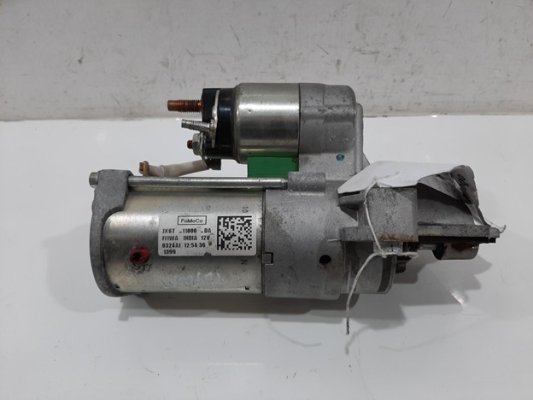
Starter motor issues are one of the most common causes of non-start problems in the Ford Focus. If you're dealing with symptoms like intermittent cranking, a clicking noise, or a complete no-start, understanding the root cause is essential before replacing parts. This guide covers how to diagnose Ford Focus starter motor problems, identify the correct replacement, and ensure reliable fitment the first time.
Key Takeaways
- Ford Focus starter motor problems often mimic battery or alternator faults—accurate diagnosis is essential.
- Common symptoms include clicking noises, slow cranking, or no response when turning the key.
- Using your VIN or registration is the safest way to ensure correct fitment.
- Replacement costs typically range from £40 to £250 depending on part type.
- DIY replacement is possible, but access varies by engine and model.
- Inspected & tested used parts can offer a cost-effective alternative to new units.
Expert Advice & Common Starter Motor Issues
Starter motor faults can leave your Focus stranded, but they’re often misdiagnosed. Many issues that appear to be a failed starter are actually caused by low battery voltage, poor connections, or immobiliser faults. Understanding typical Ford Focus starter motor problems helps avoid unnecessary part replacement.
Common issues include worn solenoids, failed brushes, internal short circuits, and pinion gear wear. These faults cause symptoms ranging from intermittent cranking to complete no-start conditions. If not addressed promptly, starter issues can also strain the battery and alternator, compounding electrical problems.
Identifying Starter Motor Symptoms
Recognising early signs of starter motor failure helps avoid unnecessary breakdowns. Key symptoms specific to the Ford Focus include:
- Single click when turning the key, with no engine turnover.
- Rapid clicking (relay chatter), often indicating low voltage at the starter.
- No sound at all, but dashboard lights illuminate—suggesting the starter isn’t engaging.
- Grinding noise during cranking, pointing to pinion or flywheel ring gear issues.
- Intermittent starting, where the engine sometimes cranks, sometimes not.
- Smoke or burning smell from the starter area, indicating overheating or internal failure.
Spotting these signs early allows for targeted diagnosis and avoids unnecessary part swaps.
Differentiating Battery, Alternator, and Immobiliser Faults
Starter motor issues often overlap with other electrical faults. Before committing to a Ford Focus starter motor replacement, check the following:
- Battery faults: Low voltage causes slow or no cranking. A healthy battery should read 12.4V+ at rest. Test voltage and try jump-starting.
- Alternator faults: If the battery repeatedly goes flat, check alternator output (13.8–14.5V when running).
- Immobiliser faults: Typically prevent any cranking and trigger a warning light (flashing padlock or key symbol) on the dash. Typically, there will be no click from the starter relay.
Accurate diagnosis saves both time and money. Trents’ technical support can help clarify symptoms if you’re unsure, but here are some common symptoms, their likely causes, and tips to verify the fault:
| Symptom | Likely Cause | Diagnostic Tip |
|---|---|---|
| Single click, no crank | Starter or relay | Test voltage at the starter terminal during crank |
| No sound, lights on | Immobiliser or wiring | Check for immobiliser warning on dash |
| Slow crank | Battery or earth fault | Measure the battery voltage under load, inspect earth straps |
| Grinding noise | Starter pinion/flywheel | Inspect teeth and check for metal debris |
| Rapid clicking | Battery/connection | Test the voltage drop at battery and starter terminals |
Ensuring Compatibility and Correct Fitment
Correct fitment is critical when replacing a starter motor for a Ford Focus. Installing the wrong unit can result in poor engagement, electrical issues, or repeat failures. Using your VIN or registration ensures the correct match for your vehicle’s engine, year, and trim. This is especially important given the variation across Focus models.
Year, Model, and Engine Size Differences
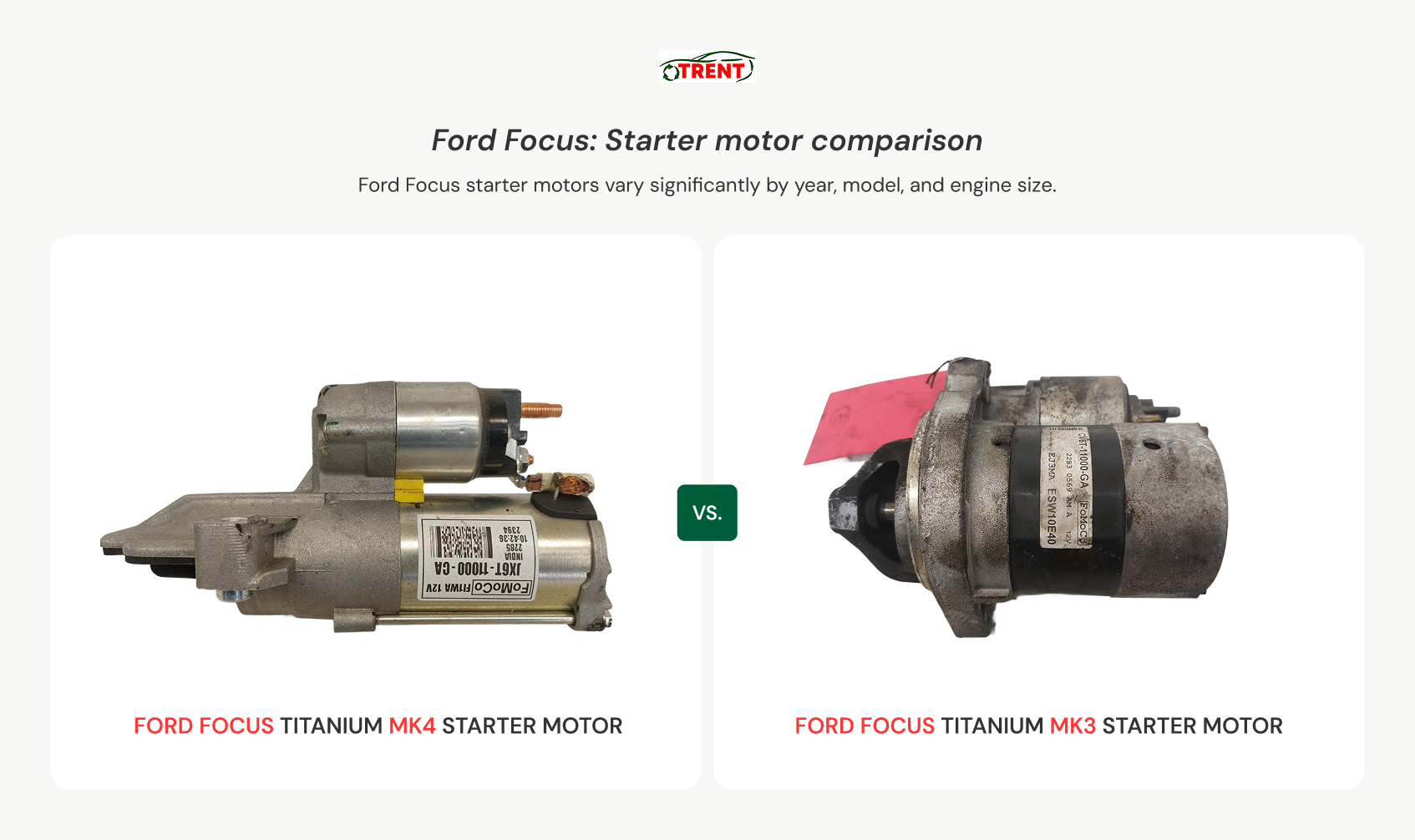
Ford Focus starter motors vary significantly by year, model, and engine size.
- Mk2 (2004–2011) 1.6 petrol uses a different starter than Mk3 (2011–2018) 2.0 diesel.
- Diesel models often require higher-torque starters with different mounting flanges.
- Mounting points, wiring connectors, and pinion gear sizes differ across models and years.
These variations make accurate identification essential before ordering.
Using VIN and Registration for Fitment
The most reliable way to confirm starter compatibility is by using your VIN (Vehicle Identification Number) or registration. Trent’s part-matching process cross-references these identifiers with Ford’s official data, ensuring the starter supplied matches your Focus’s year, engine, and trim.
Supplying your VIN or reg at point of enquiry eliminates guesswork and avoids the hassle of returns or incorrect fitment. For DIYers and garages alike, this is the safest route to the right part.
Removal, Replacement & Safety Guidance
Replacing a Ford Focus starter motor is achievable for competent DIYers and independent garages, provided the correct procedures and safety steps are followed. Access varies by engine and model year—some require working from underneath, others from above.
Ford Focus Starter Motor Location
The Ford Focus starter motor location depends on the engine type:
- Typically mounted on the gearbox bellhousing
- Positioned near where the engine meets the transmission
- Often accessed from underneath on diesel models
- Some petrol models allow partial access from above after removing the airbox.
Access difficulty varies, which affects labour time and replacement cost.
Tools and Safety Precautions
Before beginning with any Ford Focus starter motor removal, ensure you have:
- Socket set (with long extensions)
- Spanners (10mm, 13mm, 15mm common)
- Screwdrivers (flat and Phillips)
- Torque wrench (for mounting bolts—spec varies)
- Axle stands and jack (if underbody access required)
- Battery terminal puller (optional but safer)
- Safety glasses and gloves.
Safety tips: Always disconnect the negative battery terminal before starting. Allow the vehicle to cool if recently run. Support the vehicle securely if lifting. Avoid shorting terminals—starters carry high current.
Step-by-Step Removal and Installation
- Disconnect battery: Remove the negative terminal and secure it away from the post.
- Access starter: Depending on engine, remove airbox, engine covers, or undertray for access.
- Label and disconnect wiring: Note the position of main power and solenoid wires before removal.
- Remove mounting bolts: Typically 2 or 3 bolts hold the starter to the bellhousing.
- Extract old starter: Carefully manoeuvre out—space can be tight on some models.
- Compare new and old units: Check mounting points, pinion gear, and connectors match exactly.
- Install new starter: Position and hand-tighten bolts, then torque to manufacturer spec (varies by engine—consult workshop data).
- Reconnect wiring: Ensure terminals are clean and tight.
- Reconnect battery: Refit negative terminal.
- Test start: Confirm engine cranks smoothly. If not, double-check wiring and immobiliser status.
Following these steps ensures a smooth Ford Focus starter motor replacement.
Costs, Options & Maintenance Tips
Starter motor replacement costs depend on part type and labour. OEM, aftermarket, and Green Parts each have distinct benefits.
Ford Focus Starter Motor Replacement Cost
The replacement cost varies depending on the type of part used:
- OEM units: £150–£250
- Aftermarket units: £80–£160
- Quality-tested used parts: £40–£100.
Labour Costs and Time Estimates
Professional labour for Ford Focus starter replacement typically runs £70–£150, depending on engine and access required.
Time estimates:
- Petrol models: 1–1.5 hours (easier access)
- Diesel models: 1.5–2.5 hours (tighter space, more components to remove).
DIYers should allow extra time for careful disassembly and reassembly, especially on unfamiliar models.
Maintaining Starter and Electrical Connections
For long-term reliability:
- Check and clean battery terminals regularly—corrosion increases resistance and causes starting issues.
- Inspect earth straps between engine, body, and battery—loose or corroded straps are a common cause of poor starting.
- Listen for slow cranking—address immediately to avoid damaging the new starter.
- Keep connectors dry and free from oil or coolant leaks.
Preventative maintenance reduces the risk of repeat failures.
Common Mistakes to Avoid
- Replacing the starter without testing the battery first
- Installing an incorrect unit based on appearance
- Ignoring wiring or earth faults
- Failing to torque mounting bolts correctly.
Avoiding these mistakes helps ensure long-term reliability.
Related Guides
For further repairs and diagnostics, see:
- Ford Focus alternator replacement
- Ford focus gearbox replacement
- Ford Focus wing mirror replacement
- Ford Fiesta starter motor replacement.
Ready to Replace Your Ford Focus Starter?
Choosing the right Ford Focus starter motor starts with accurate identification. Using your VIN or registration helps ensure the replacement unit matches your vehicle correctly, reducing the risk of fitment issues or returns. If you’re sourcing a replacement, Trents supplies a range of used and recycled starter motors that are checked for condition and compatibility. You can browse available Ford Focus parts or speak to their team if you need help confirming fitment before ordering.
FAQs
How do I know if my Ford Focus starter motor is faulty?
Common signs include a single click with no crank, grinding noises, or no response when turning the key. If power reaches the starter but it doesn’t operate, the unit is likely faulty.
Where is the starter motor located on a Ford Focus?
The starter motor is typically mounted on the gearbox bellhousing, near the engine. Access may be from above or below depending on the engine.
What happens if I fit the wrong starter motor?
Incorrect fitment can cause poor engagement, damage to the flywheel, or electrical issues. Always confirm compatibility using VIN or registration details.
Can I use a 2.0L starter on a 1.0L Focus?
No—different engine sizes require specific starter motors due to differences in torque, mounting, and electrical connections. Always match the starter to your Focus’s exact engine and year to avoid fitment and reliability issues.
How do I reset the immobiliser after replacement?
Some Focus models require a key cycle or diagnostic tool reset after starter replacement. Insert the key, turn to position II, and wait for the immobiliser light to extinguish. If the warning persists, a diagnostic scan or Ford dealer reset may be needed.