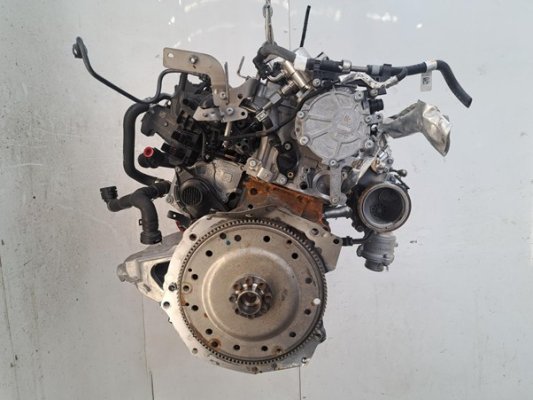
If you’re considering an Audi A5 engine replacement, it’s important to know what to look for and what to avoid. At Trent’s, we handle thousands of Audi engines and parts each year, so we know exactly where swaps go wrong—and how to get them right.
In this guide, we’ll cover compatibility, costs, and choosing between a DIY vs professional fitting. We’ll also cover common Audi A5 engine problems and the pitfalls that catch out even experienced garages.
Key Takeaways
- Always match the exact engine code when sourcing a replacement Audi A5 engine. Even small differences in model year or spec can cause fitment, wiring, or ECU issues.
- Budget for more than just the engine. Consider the cost of labour, ancillaries, and ECU programming. We recommend a 10–20% contingency for surprises.
- A used Green Parts engine can cut costs significantly (from around £2,500 total vs £10,000+ for new).
- This is not a beginner DIY job. If you’re not experienced in engine swaps, we strongly recommend a professional fitting.
- Check timing chain condition and oil consumption history before fitting any used 2.0 TFSI engine. These common Audi A5 engine problems can cause repeat failures.
- Post-installation programming, diagnostics, and a thorough test drive are just as important as the physical swap itself.
Engine Compatibility, Fitment & Replacement Types
First things first. Whenever doing an engine swap, the first thing to consider is compatibility.
Audi A5 engine compatibility depends on several factors: model year, engine code, fuel type (petrol or diesel), and transmission. Even small differences—like a facelift year or quattro vs front-wheel drive—can affect fitment.
Standard replacements involve fitting an engine with the same code and spec as the original. Performance swaps (such as fitting an S5 or RS5 engine) are possible, but usually require extensive modifications to wiring, ECU, and running gear.
To check for compatibility, you’ll need to look at:
- Engine code: Must match exactly for plug-and-play swaps. This will be stamped on the block or available via VIN lookup.
- Transmission compatibility: Manual and automatic engines often differ in mounts and flywheel arrangements.
- Ancillary components: Turbochargers, manifolds, and wiring harnesses may not transfer directly between engines of the same displacement but different codes.
- ECU and immobiliser: Swapping to a different engine code often requires reprogramming or replacing the ECU and immobiliser system.
You can use manufacturer databases or consult with a specialist like Trents to cross-reference part numbers.
Proper alignment requires checking engine mounts, driveshaft angles, and ensuring the gearbox mates correctly. Specialist tools, such as engine hoists and alignment jigs, are essential for accurate installation. If in doubt, seek expert confirmation before committing to a purchase.
Audi A5 Engine Replacement Costs & Considerations
Engine replacement costs vary widely, depending on the engine’s condition, source, and the complexity of the swap. Budgeting accurately means accounting for more than just the engine itself.
Here's a typical cost breakdown for an Audi A5 engine swap:
| Engine Source | Engine Cost (approx.) | Labour (approx.) | Ancillaries & Fluids | Total (low-high) |
|---|---|---|---|---|
| New | £9,560–£11,980 | £1,000–£2,000 | £300–£600 | £10,860–£14,580 |
| Reconditioned | £2,500–£4,500 | £1,000–£2,000 | £300–£600 | £3,800–£7,100 |
| Used (Green Part) | £1,200–£2,250 | £1,000–£2,000 | £300–£600 | £2,500–£4,850 |
Labour costs depend on the garage, region, and engine complexity. Ancillaries include gaskets, belts, mounts, and fluids.
New, Used, and Rebuilt Engine Pricing
Audi A5 engine replacement costs will vary depending on whether you opt for a new engine, a reconditioned engine, or Green Parts.
- New engines: Highest reliability and warranty, but costliest. Usually only justified for nearly-new cars or warranty claims.
- Reconditioned engines: Fully rebuilt with new internals, offering a balance of reliability and price. Check for a solid warranty and proof of rebuild.
- Used/Green Parts: Cost-effective and environmentally friendly. At Trent’s, all used engines are tested and matched by code, minimising risk. Always check mileage, service history, and supplier reputation.
Cost Risks and Budgeting
Remember that parts aren’t the only components you need to budget for. Hidden costs include:
- Additional parts: Sensors, ECUs, wiring, and exhaust components may need replacing.
- Labour overruns: Unexpected issues (seized bolts, damaged mounts) can increase fitting time.
- Incorrect compatibility: Buying the wrong engine code or incompatible ancillaries leads to wasted time and extra expense.
- Programming: ECU and immobiliser pairing often require dealer-level tools, adding to the bill.
Our advice? Plan for a contingency fund (10–20%) to cover surprises.
DIY vs Professional Installation: Pros, Cons & Safety
An Audi A5 engine swap is not a basic DIY job. It requires advanced mechanical skills, specialist tools, and a safe workspace. However, some experienced enthusiasts with a well-equipped garage can manage a straightforward like-for-like swap.
Professional installation offers peace of mind, correct programming, and warranty support. DIY fitting can save money, but it increases the risk of errors, especially with modern electronics.
Choosing Between a DIY Engine Swap or Professional Fitting
Opt for a DIY engine swap only if you have:
- Prior engine swap experience
- Access to a fully equipped garage (engine hoist, stands, torque wrenches, diagnostics)
- Time and patience for unforeseen issues
Choose professional fitting if:
- The swap involves different engine codes, major wiring changes, or immobiliser/ECU programming
- You lack access to dealer-level diagnostic tools
- You want a warranty on the installation
Essential Tools, Resources & Safety
If you decide to opt for a DIY engine swap, ensure that you have the following key tools and resources:
- Engine hoist or crane
- Torque wrenches (specs vary by engine)
- Diagnostic scanner (VCDS or dealer-level for Audi)
- Workshop manual (model/year specific)
- Quality socket and spanner sets
- Axle stands and wheel chocks
- Personal protective equipment (gloves, goggles, steel-toe boots)
Safety is paramount. Always disconnect the battery, support the vehicle securely, and work with a helper when moving heavy components.
Common Mistakes & What to Avoid
Trents sees recurring errors with Audi A5 engine replacements. Most stem from skipping compatibility checks or underestimating the complexity of modern engine management.
Oil Consumption, Timing Chain & Compatibility Pitfalls
- Oil consumption: Many A5 petrol engines (especially early 2.0 TFSI) suffer from high oil usage. Replacing the engine without addressing underlying causes (piston rings, PCV system) leads to repeat failures.
- Timing chain failure: Ignoring chain rattle or stretch results in catastrophic engine damage. Always check chain condition before fitting a used engine.
- Compatibility errors: Swapping in an engine with a different code or from a different model year often causes mounting, wiring, or ECU issues.
- Misleading quotes: Some garages quote low for the engine, then add extras (mounts, sensors, reprogramming) later. Always get a full, itemised quote.
Avoid shortcuts—verify every part of the swap before committing.
Post-Installation Checks & Programming
A successful engine swap doesn’t end when the engine fires up. Thorough post-installation checks and programming are essential for reliability and performance.
ECU Programming, Immobiliser & Ancillary Checks
- ECU programming: The replacement engine’s ECU must be coded to the car. This includes adapting immobiliser data and, in some cases, updating software to match the new engine.
- Immobiliser pairing: Failure to pair the immobiliser will prevent starting or trigger warning lights.
- Mounts, belts, hoses: Inspect all mounts for correct alignment and torque. Replace worn belts, hoses, and gaskets to prevent leaks or future breakdowns.
- Fluids: Use manufacturer-approved oil and coolant, and bleed the cooling system thoroughly.
- Diagnostics: Scan for fault codes and carry out a full test drive, monitoring for leaks, noises, or warning lights.
Ready to Replace Your Audi A5 Engine?
Trent’s supplies quality-checked, Green Parts engines for every Audi A5 variant, with expert advice to guarantee correct compatibility. Our engines are tested, catalogued, and matched by code, saving you time and avoiding costly mistakes.
For the right engine, delivered fast and backed by warranty, browse our Audi A5 engine stock or contact our team for compatibility guidance. Read more about sustainable Green Parts, and view our stock of all Audi A5 parts.
FAQ: Audi A5 Engine Replacement
Can I swap my Audi A5 engine with an RS5 V8?
Physically fitting an RS5 V8 into an A5 is possible but requires major modifications—custom mounts, wiring, ECU, and transmission upgrades. The electronics are complex and will need extensive reprogramming. This is a specialist job, not a standard swap.
How do I know if my Audi A5 engine needs a full replacement?
Signs include severe knocking, catastrophic failure (hole in block), persistent low compression, or repeated major faults that repairs haven’t resolved. If the cost of repairs approaches or exceeds the value of a replacement, a full swap is usually more economical.
What are the signs of timing chain failure?
Warning signs include rattling on cold start, engine warning lights, misfires, and poor running. Ignoring these symptoms can lead to total engine failure, often without further warning.
Is it worth repairing oil consumption issues or replacing the engine?
Excessive oil consumption is one of the most common Audi A5 engine problems. If oil consumption is due to worn piston rings or cylinder walls, repair can be expensive and labour-intensive. For high-mileage engines, a quality-tested replacement is often more cost-effective and reliable long-term.