Replacing or upgrading a VW Beetle engine requires careful planning, precise fitment, technical know-how, and a clear understanding of compatibility. Whether you’re dealing with a worn-out unit or considering a performance upgrade, getting the details right can save significant time and cost. Supported by Trents’ real-world expertise, this guide provides step-by-step, practical advice for a successful Beetle engine replacement or swap, focusing on compatibility, understanding swap options and removal steps, and sourcing a reliable VW Beetle replacement engine.
Key Takeaways
- VW Beetle engine compatibility depends on the year, engine code, and model type.
- Classic (air-cooled) and modern (water-cooled) engines are not directly interchangeable.
- A VW Beetle engine swap often requires custom mounts, wiring, and cooling upgrades.
- DIY engine replacement is possible, but labour-intensive and error-prone.
- Always verify fitment using VIN and engine code before buying.
- Sourcing from a reputable supplier helps reduce risk and ensures tested, compatible parts.
Understanding VW Beetle Engine Types
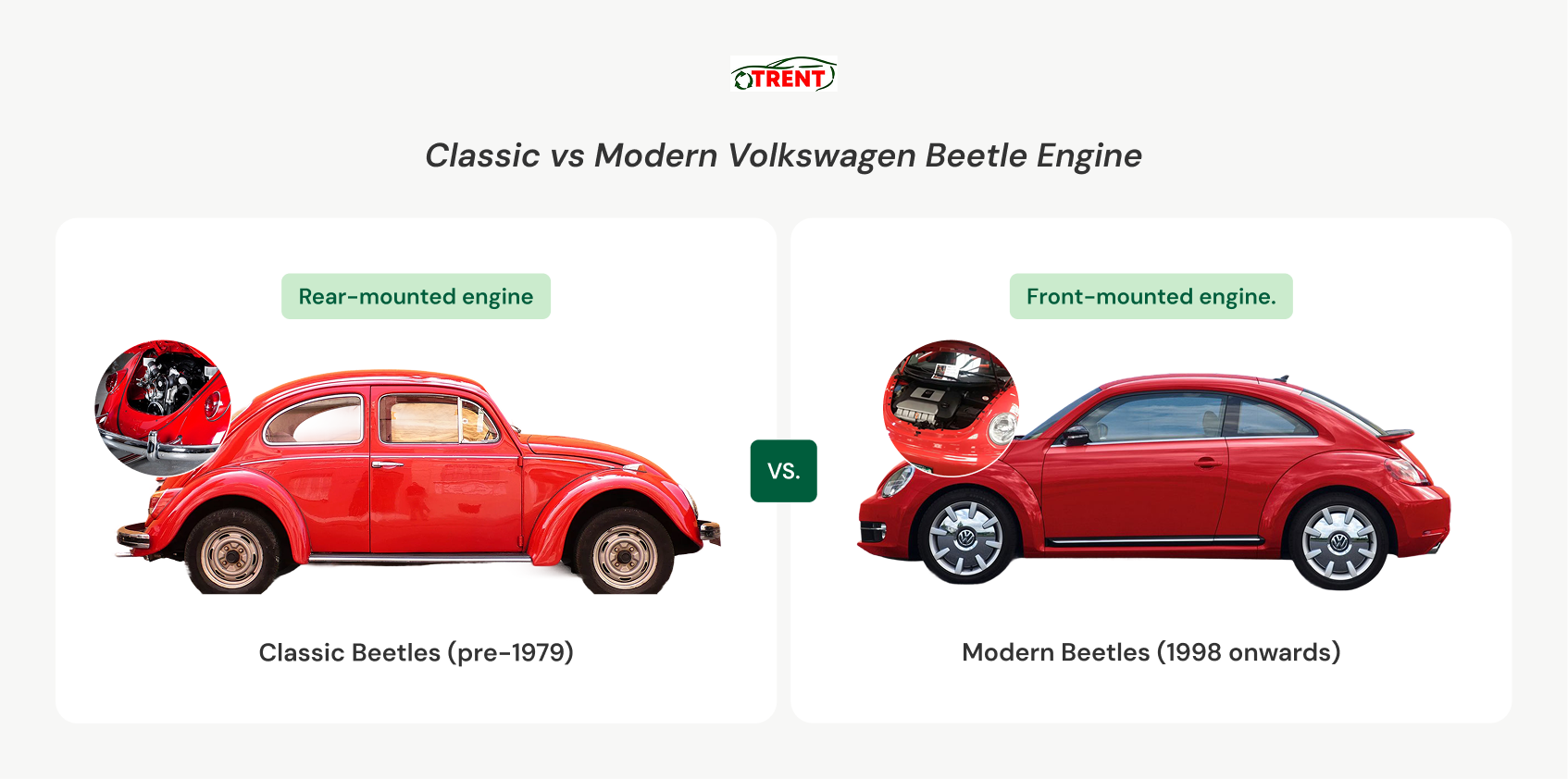
Classic vs Modern Volkswagen Beetle Engine
The type of Volkswagen Beetle engine you’re working with will determine what’s possible for your swap or modifications.
Classic Beetles (pre-1979):
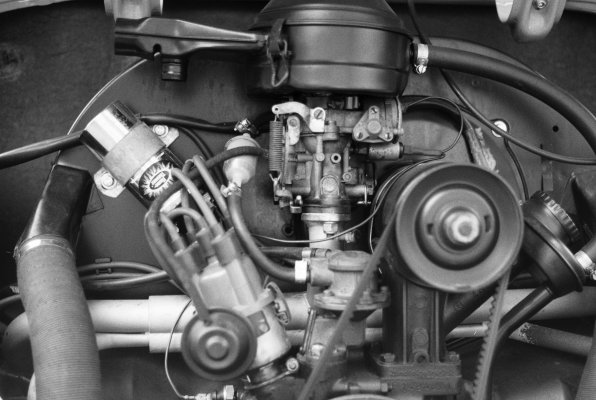
- Air-cooled flat-four engines
- Simple mechanical setup
- Easier for DIY work and classic VW Beetle engine swap projects.
Modern Beetles (1998 onwards):
- Water-cooled inline engines
- Electronic control units (ECU), sensors, and fuel injection
- More complex installation and diagnostics.
Why this matters:
- Air-cooled and water-cooled systems are not directly compatible.
- Engine bays, mounts, start, alternator, exhaust, and wiring differ significantly by year and engine code.
- Modern swaps may require ECU programming or immobiliser matching.
VW Beetle Engine Swap Compatibility
There is no universal VW Beetle engine swap compatibility chart, but these principles apply:
- Match the engine code and VIN wherever possible
- Check mounting points and gearbox compatibility
- Ensure ECU and wiring compatibility for modern engines.
Fitment by Year, Model, and VIN
Correct engine fitment starts with accurate identification. Use the following steps for reliable matching:
- Locate your Beetle’s VIN—usually found on the bulkhead or under the rear seat (classic), or at the base of the windscreen (modern).
- Check the engine code—often stamped on the engine block. This is essential for matching ancillaries and ECU compatibility.
- Source expert guidance on compatibility for extra assurance.
Tip: Never assume compatibility based on engine size alone—always verify using VIN and engine code.
Before buying, it’s worth browsing our available options:
VW Beetle Engine Location
Understanding the VW Beetle engine location is essential before starting removal. This difference in these engine locations impacts everything from access to removal time and tooling:
- Classic Beetle: Rear-mounted engine (behind the rear axle)
- Modern Beetle: Front-mounted engine (under the bonnet).
Rebuild, Replace, or Swap: Industry Knowledge & Practical Advice
Pros and Cons of Rebuilt Engines
Rebuilt engines are original units disassembled, cleaned, and reassembled with new or reconditioned parts.
Advantages:
- Cost-effective compared to new
- Retain original fitment and ancillaries
- Lower environmental impact if using tested Green Parts
Disadvantages:
- Quality varies—depends on the rebuilder’s skill and parts used
- No guarantee all critical wear points are addressed
- Some rebuilt engines lack proper documentation or warranty.
Always request a rebuild sheet, parts list, and test results before purchase.
New Engines vs Engine Swaps
New engines (crate or remanufactured) offer factory reliability and warranty, but are expensive and may be difficult to source for older Beetles.
Engine swaps (installing a different engine type or model) can boost performance or reliability, but usually requires custom mounts, wiring, and often significant modifications.
Comparison Table: New Engine vs Engine Swap
| Aspect | New Engine (OE/Reman) | Engine Swap (Non-OE) |
|---|---|---|
| Fitment | Direct (if matched) | Custom work required |
| Performance | Original spec | Can improve significantly |
| Cost | High | Variable (often higher) |
| Complexity | Moderate | High |
| Warranty | Usually included | Rarely included |
| Parts Availability | Limited (older models) | Wider (if swap is common) |
VW Beetle Engine Swap Options
Popular VW Beetle engine swap options include:
Subaru flat-four (EJ20/EJ25):
- Reliable and widely used
- Requires cooling system conversion.
Mazda rotary (13B):
- Lightweight and powerful
- Needs specialist setup and tuning.
Porsche flat-six:
- High performance
- Expensive and fabrication-heavy.
A Volkswagen Beetle engine swap can deliver strong performance gains, but expect significant custom work.
Required Modifications for Engine Swaps
A VW Beetle engine swap typically requires:
- Custom engine mounts (essential for non-original engines)
- Gearbox or adaptor plate modifications
- Cooling system installation (for water-cooled engines)
- Wiring loom and ECU integration
- Fuel system upgrades
- Custom exhaust fabrication.
Additional upgrades to brakes and suspension are often necessary for higher-powered builds.
Sourcing Quality Engines and Parts
When buying a VW Beetle replacement engine:
- Choose a reputable supplier
- Ask for compression test results and history
- Confirm compatibility using VIN and engine code
- Check warranty terms carefully
- Plan for reliable delivery with secure packaging.
Suppliers like Trents offer inspected recycled engines (often called Green Parts), which can be a cost-effective option when properly verified. For related guidance, see our VW polo engine replacement guide.
Step-by-Step Removal & Installation
Replacing a VW Beetle engine involves two key stages: Safely removing the old unit and correctly installing the replacement. The exact process varies between classic (rear-engine) and modern (front-engine) Beetles, but the core steps remain similar.
Time Expectations
- Classic Beetle: 10–20 hours (DIY)
- Modern Beetle: 20+ hours (DIY or professional recommended).
Step 1: Preparation and Safety
Before starting any VW Beetle engine removal:
- Disconnect the battery
- Depressurise and disconnect fuel lines
- Drain engine oil and coolant (for water-cooled models)
- Label all wiring, hoses, and connections
- Ensure the car is securely supported on axle stands.
Tip: Take photos before disassembly—this makes reinstallation much easier.
Step 2: Removing the VW Beetle Engine
Classic Beetle (Rear Engine)
- Remove rear engine tinware (if fitted)
- Disconnect wiring loom, fuel line, and throttle cable
- Detach exhaust components if required
- Support the engine with a jack or hoist
- Unbolt engine mounting bolts from the gearbox
- Carefully slide the engine away from the gearbox and lower it
Modern Beetle (Front Engine)
- Remove intake system and engine covers
- Disconnect battery, wiring harness, and ECU connections
- Remove radiator connections and coolant hoses
- Detach driveshafts (if required)
- Support engine and gearbox assembly
- Unbolt engine mounts and lift the engine out (often from above)
Note: Modern VW Beetle engine removal is significantly more complex and may require specialist tools.
Step 3: Inspect and Prepare for Installation
Once you understand how to remove a VW Beetle engine, installation becomes a reverse process, but with a few key checks:
Before fitting your VW Beetle replacement engine:
- Compare engine codes to confirm compatibility
- Transfer required ancillaries (alternator, starter, sensors)
- Replace wear items (clutch, seals, timing components if accessible)
- Check mounts and bushes for wear
- Clean the engine bay and inspect wiring.
This step helps avoid having to remove the engine again later.
Step 4: Installing the Replacement Engine
Key installation steps:
- Position the engine carefully and align with the gearbox
- Secure engine mounts and torque bolts to specification
- Reconnect fuel lines, wiring, and cooling system
- Reinstall intake, exhaust, and ancillary components
- Refill fluids (oil, coolant)
- Reconnect the battery
Tip: Never force alignment—misalignment can damage the gearbox or mounts.
Step 5: First Start and Testing
Before starting the engine:
- Prime the oil system (crank without starting if possible)
- Double-check all connections and fluid levels.
After starting:
- Check for oil, fuel, or coolant leaks
- Listen for unusual noises
- Monitor engine temperature and warning lights.
Allow the engine to idle and reach operating temperature before driving.
When to Consider Professional Help
You may want to use a specialist if:
- You’re working on a modern Beetle with ECU integration
- The job involves a VW Beetle engine swap rather than a direct replacement
- You lack access to lifting equipment or workspace.
Cost Breakdown: DIY vs Professional
DIY replacement
- Used or rebuilt engine: £500–£2,000
- Gaskets, fluids, ancillaries: £100–£300
- Tools (if not already owned): £100–£500
- Time: 10–20 hours (classic), 20+ hours (modern/swap)
- Hidden costs: Engine hoist hire, unexpected parts, disposal fees.
Professional replacement
- Labour: £500–£1,500 (simple swap), £2,000+ (custom swap)
- Additional costs: Diagnostics, programming, fabrication (if required)
- Warranty: Often included on parts and labour.
Summary: DIY is feasible for experienced enthusiasts but can become costly if mistakes are made. Professional fitting is safer for complex swaps or modern engines.
Common Mistakes To Avoid
- Assuming all Beetle engines fit all years—they don’t. Always check VIN and engine code.
- Overlooking ancillary differences—starter, alternator, sensors, and exhaust can vary by year and market, make sure to check these.
- Neglecting ECU/immobiliser compatibility on modern Beetles.
- Reusing old gaskets or seals—always fit new, quality replacements.
- Skipping pre-fitment checks—measure mounting points, check clutch/flywheel compatibility, and confirm clearance.
- Rushing alignment—misalignment can cause gearbox or mount failure.
FAQs
What is the best engine for a VW Beetle swap?
It depends on your goal. Subaru engines are popular for reliability, while Porsche engines offer performance. Each option requires different levels of modification.
How Do I Verify a Quality Engine Rebuild?
Look for a detailed rebuild sheet, parts list, and evidence of machine work. Ask for compression test results, warranty terms, and supplier reputation.
How much does a VW Beetle engine replacement cost?
A VW Beetle engine replacement typically costs £700 to £2,800 for DIY, or £1,000 to £3,500+ with professional fitting, depending on complexity.
Can I replace a VW Beetle engine myself?
Yes, especially on classic models. However, removing a VW Beetle engine requires mechanical knowledge, tools, and time. Modern Beetles are more complex and often better handled by professionals.
Are all VW Beetle engines interchangeable?
No. Compatibility depends on engine code, model year, and configuration. Always verify before purchasing to avoid costly mistakes.