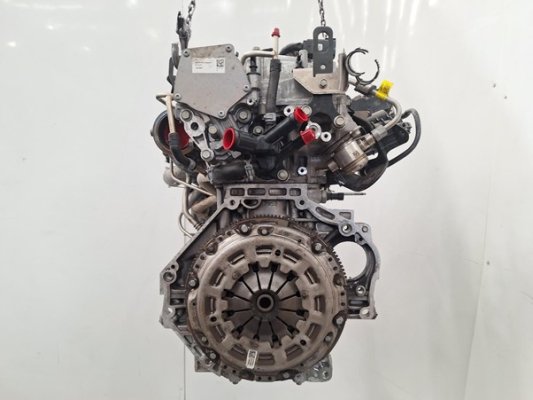
Replacing a Vauxhall Astra engine is a significant task that demands technical precision, the right parts, and a clear understanding of compatibility.
The Vauxhall Astra spans several generations — Mk4, Mk5, J, and K — each with different engine mounts, wiring, ECU systems, and ancillaries. That means even a like-for-like engine replacement needs careful code matching, and cross-generation swaps are rarely worth the effort.
This guide covers how to identify and match the right engine, a step-by-step overview of the removal and installation process, realistic costs, and the mistakes that most commonly cause problems after fitting.
If you’re looking for help with a Vauxhall Corsa, take a look at our guides on Vauxhall Corsa engine swaps and starter motor replacements.
Key Takeaways
- When it comes to Vauxhall Astra engine replacements, compatibility is key. Always match the exact engine code stamped on the block. Even same-displacement Astra engines can differ.
- Cross-generation swaps (e.g. Mk5 engine into an Astra J) require extensive modification to mounts, wiring, and electronics. Like-for-like is almost always the practical choice.
- Modern Astras use immobiliser-linked ECUs—if the replacement engine comes from a different code or generation, you'll need the donor ECU, transponder chip, and sometimes the ignition barrel.
- Vauxhall Astra engine replacement costs vary. Total cost typically runs £1,100–£2,700 for a quality used engine with professional fitting, plus £200–£550 for ancillaries and programming.
- Always consult the model-specific workshop manual—Astra generations differ enough that generic advice can lead you astray.
Expert Advice and Common Mistakes in Astra Engine Replacement
With decades of experience supplying and dismantling Astra engines, the Trents team has seen every pitfall. The most common mistakes stem from poor compatibility checks and rushed installations. Fitting the wrong engine code, mismatching transmission types, or skipping ECU pairing can lead to expensive do-overs.
Key mistakes to avoid:
- Failing to match engine codes exactly—minor differences can mean major fitment or running issues.
- Overlooking transmission compatibility—manual and automatic engines are not always interchangeable.
- Neglecting to swap or reprogramme the ECU and ignition components when required.
- Ignoring differences in mounts, wiring, or ancillaries between Astra generations.
- Reusing worn gaskets, belts, or sensors, risking leaks and premature failure.
- Underestimating the time, tools, and technical skill required for a safe, clean installation.
Trents stocks a wide range of quality-checked Astra engines and provides detailed fitment support. If in doubt, ask before you buy—incorrect fitment is the fastest way to turn a cost-saving swap into a costly mistake.
Engine Compatibility and Fitment Essentials
Correct engine fitment is about more than just physical size. Astra engines vary widely by generation, engine code, and transmission type. Even within the same model year, small differences in wiring, sensors, or ECU programming can cause major headaches.
Key Engine Codes for Astra Models
Every Astra engine has a unique engine code—such as Z16XEP, A17DTR, or B14XFT—stamped on the block and listed in your V5C logbook or service manual. Matching this code is critical. Even engines with the same displacement can have different ancillaries, emissions controls, or ECU requirements.
To identify your engine code:
- Check the VIN plate (usually in the engine bay or driver's door shut).
- Look for the stamped code on the engine block (often near the gearbox join).
- Cross-check with your service history or online Vauxhall databases.
Never rely on visual similarity alone. Always confirm the engine code matches exactly before purchase or installation.
ECU and Ignition Swap Requirements
Modern Astras use immobiliser-linked ECUs and ignition systems. Swapping the engine without the correct ECU, transponder chip, and sometimes the ignition barrel can result in a non-start or warning lights.
ECU and ignition swaps are required when:
- The replacement engine is from a different code or generation.
- The ECU is coded to the original engine’s immobiliser.
- There are changes to emissions or sensor configurations.
If the replacement engine is an exact match and all ancillaries are retained, sometimes only a reset or minor reprogramming is needed. Skipping this step risks immobiliser lockout, poor running, or MOT failures.
Fitment Differences Between Astra Generations
Astra fitment varies significantly across generations (Mk4, Mk5, J, K, etc.). Key differences include:
- Engine mounts: Positions and brackets change between generations.
- Wiring harnesses: Connector types, sensor locations, and loom lengths can differ, especially with turbocharged or diesel models.
- Ancillary components: Alternators, air conditioning compressors, and exhaust manifolds often change with each generation.
- ECU and immobiliser systems: Later models (Astra J/K) have more integrated electronics, increasing the need for matched components.
Attempting to fit an engine from a different generation usually requires extensive modification—rarely cost-effective or reliable without specialist knowledge.
Step-by-Step Astra Engine Replacement Guide
Engine replacement is complex, but with the right approach, experienced DIYers and independent garages can achieve a reliable result. The following is a high-level overview—always consult the official workshop manual for your specific Astra model.
Essential Tools and Equipment
Preparation is critical. You’ll need:
- Engine hoist or crane (rated for at least 300kg)
- Axle stands and trolley jack
- Full socket and spanner set (metric)
- Torque wrench (range depends on engine, always check manual)
- Breaker bar and extensions
- Screwdrivers (flat and Phillips)
- Pry bars and trim tools
- Fuel line disconnect tools
- Cooling system drain pan
- Drip trays and absorbent mats
- Personal protective equipment: gloves, safety glasses, steel-toe boots
Thoroughly clean the workspace and label all removed parts to avoid confusion during reassembly.
Removing and Installing the Engine
Key steps for Astra engine removal and installation:
- Disconnect the battery (negative terminal first).
- Drain all fluids: coolant, oil, and fuel (if required).
- Remove bonnet for better access.
- Disconnect wiring looms, fuel lines, and vacuum hoses—label each connection.
- Remove exhaust downpipe and catalytic converter connections.
- Detach driveshafts from gearbox (manuals may require gearbox removal).
- Support engine and gearbox with hoist and stands.
- Unbolt engine mounts and carefully lift engine out.
- Transfer ancillaries (alternator, starter, sensors) from old to new engine as required.
- Lower replacement engine into bay, align mounts, and secure to correct torque.
- Reconnect wiring, fuel, and coolant lines—double-check all connectors.
- Refit exhaust, driveshafts, and bonnet.
- Refill fluids with correct grades and bleed cooling system.
Take care with wiring and fragile connectors. Never force components—misalignment can cause leaks or damage.
Resetting ECU and System Checks
After installation:
- Reset the ECU using a diagnostic tool (OBD-II scanner). Some models require dealer-level software for full adaptation.
- Clear any fault codes and check for warning lights.
- Prime fuel system and check for leaks.
- Start engine and let it idle—monitor for abnormal noises, leaks, or warning lights.
- Check coolant temperature and confirm fan operation.
- Test drive at low speeds, monitoring all systems.
A comprehensive check at this stage prevents costly issues later.
Costs: Engines, Labour, and DIY vs Professional
Engine replacement costs vary widely based on engine type, source, and installation method. Here’s what to budget for an Astra swap.
New vs Second-Hand Engine Costs
| Engine Type | Typical Price Range | Pros | Cons |
|---|---|---|---|
| New (OEM) | £1,500–£3,000+ | Zero miles, full warranty | High cost, limited availability |
| Reconditioned | £900–£1,800 | Refurbished, some warranty | Variable quality, core return required |
| Second-hand (Green) | £400–£1,200 | Cost-effective, eco-friendly | Mileage varies, check supplier quality |
Trent’s Green Parts engines are carefully quality-checked, offering a sustainable and budget-friendly alternative to new units. Always verify mileage, service history, and warranty terms.
Labour and Additional Parts Expenses
- Labour charges: £500–£1,200 at independent garages; main dealers charge more.
- Gaskets and seals: £50–£150 (always replace during swap).
- Fluids (oil, coolant, gearbox): £50–£100.
- Ancillaries (belts, water pump, sensors): £100–£300 if required.
- ECU programming: £60–£200, depending on model and software.
DIYers save on labour but must invest in tools and allow significant time—typically 10–16 hours for a careful swap.
Ready to Replace Your Vauxhall Astra Engine?
A successful Astra engine replacement depends on correct-fit parts, careful preparation, and reliable suppliers. Trent’s offers a wide range of quality-checked Astra engines and expert advice to help you avoid common mistakes.
For peace of mind, consider our Green Parts for a sustainable, cost-effective solution. If you need guidance on fitment or want to check availability, view all Astra parts, or contact our team for expert support.
Frequently Asked Questions
What causes engine noise after an Astra engine swap?
Vauxhall Astra Engine noise problems can indicate loose mounts, exhaust misalignment, or worn ancillaries. It’s a good idea to seek professional assistance if you can’t diagnose the problem yourself.
Which engines fit the Astra B14XFT and Astra K?
The Astra B14XFT engine is a 1.4 turbo petrol used in Astra J and K models. Only engines with the exact B14XFT code and matching transmission type (manual or automatic) will fit without modification. For Astra K, use engines from the same generation and match all ancillaries and ECU requirements.
What are some common Vauxhall Astra engine problems?
Common Vauxhall Astra engine faults include turbocharger failure, DPF blockages in diesels, high oil consumption, and timing chain issues. In this case, an engine replacement might be appropriate. If the engine damage is localised or minor, a repair may be more cost-effective.
Where do I find the engine code on a Vauxhall Astra?
The Vauxhall Astra engine code location is generally on the engine block, often near the gearbox junction, the dipstick, or below the cylinder head. Contact a professional if you can’t locate it.