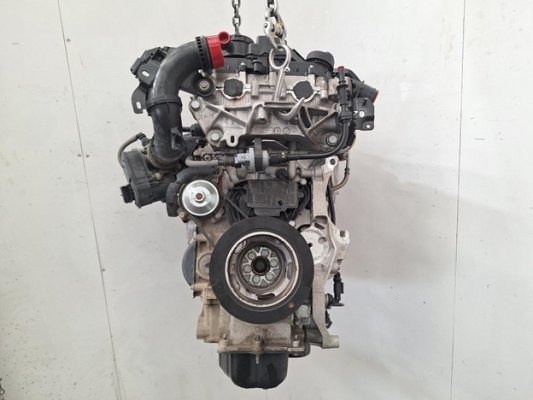
The Vauxhall Corsa is one of the most common cars on UK roads, which means replacement engines are widely available, but that doesn't make the swap simple.
During a Vauxhall Corsa engine replacement, it’s important to focus on compatibility, precise fitment, and legal compliance.
This guide covers compatibility by model, essential parts and upgrades, cost breakdowns, legal steps, and how to avoid costly mistakes—ensuring your swap is reliable, road legal, and cost-effective.
Key Takeaways
- Match the exact engine code, not just the engine size. Even within the same Corsa generation, differences in sensors, ECU, and wiring can prevent a swap from working.
- Cross-generation swaps (e.g. Corsa C engine into a Corsa D) are rarely practical due to mounting, wiring, and electronics differences. Like-for-like is almost always the better route.
- A quality, used Vauxhall Corsa engine replacement costs £400–£1,200. However, labour, ancillaries, ECU programming, and potential suspension upgrades can add £730–£1,650 on top.
- Corsa D and E models use CAN-bus wiring and integrated immobilisers — ECU and key pairing is essential, not optional. Factor in diagnostic tools or professional programming from the start.
- Update your V5C with DVLA and notify your insurer before driving. Missing this step can invalidate your insurance and risk prosecution.
Engine Compatibility & Fitment by Corsa Generation
As with all swaps, engine compatibility is the single most important factor in a successful Vauxhall Corsa engine swap. The engines vary significantly across generations (C, D, E), and even within the same model year, differences in engine codes, mounts, and electronics can cause headaches.
Before buying a Vauxhall Corsa replacement engine, be sure to match your existing engine code exactly, or consult a trusted supplier like Trent’s for cross-compatibility checks.
Fitment Differences & Donor Engine Choices
Physical fitment isn’t just about engine size. Mounting points, wiring harnesses, and ECU compatibility all differ between Corsa C, D, and E. For example, a 1.2 petrol from a Corsa C won’t drop straight into a Corsa D without significant changes to mounts and electronics. Later models often use CAN-bus wiring and integrated immobilisers, making swaps more complex.
Recommended donor engines (with notes):
- Corsa C (2000–2006):
- 1.0, 1.2, 1.4 petrol (Z10XE, Z12XE, Z14XE)
- 1.7 diesel (Y17DT)
- Must match engine code and ECU; immobiliser pairing required.
- Corsa D (2006–2014):
- 1.2, 1.4 petrol (Z12XEP, Z14XEP, A12XER, A14XER)
- 1.3, 1.7 diesel (Z13DTH, A17DTR)
- Later engines use different sensors and ECUs—check wiring compatibility.
- Corsa E (2014–2019):
- 1.0 turbo, 1.2, 1.4 petrol (B10XFL, B12XEL, B14XEL)
- 1.3 diesel (B13DTR)
- CAN-bus and immobiliser integration critical; ECU and key pairing required.
Swapping engines between generations (e.g., Corsa C engine into a D) is rarely cost-effective due to mounting and wiring differences. Always confirm with a supplier before purchasing.
Essential Parts, Upgrades & Modifications
A reliable engine swap is more than just the engine itself. Ancillary components—gearbox, clutch, ECU, wiring, mounts, and suspension—must be checked for compatibility and condition. Neglecting these can lead to poor performance or premature failure.
Browse Trents Vauxhall Corsa parts. You may also benefit from reading our Vauxhall Corsa starter motor replacement guide.
Gearbox, Clutch, ECU & Suspension
- Gearbox:
Match the gearbox to the new engine’s code and output. Higher-output engines often require stronger gearboxes. Swapping from petrol to diesel (or vice versa) typically demands a gearbox change. - Clutch:
Always inspect and, if in doubt, replace the clutch during a swap. Upgrading is strongly recommended if you’re fitting a more powerful engine. - ECU (Engine Control Unit):
The ECU must match the engine code. Swapping to a different engine family usually requires the donor ECU and sometimes the immobiliser and key chip. Reprogramming may be needed. - Wiring Harness:
Later Corsas use complex wiring harnesses with integrated immobilisers. Ensure the harness matches the engine and ECU, or be prepared for custom wiring. - Suspension & Brakes:
Heavier or more powerful engines may require upgraded suspension and brakes to maintain safe handling and stopping distances.
Vauxhall Corsa Engine Replacement Costs, Budgeting & Installation Options
Engine swap costs vary widely:
- Used/Green Parts engine: £400 – £1,200
- Reconditioned engine: £1,200 – £2,000
- Labour (professional): £400 – £800
- Ancillary parts (fluids, belts, gaskets): £100 – £250
- ECU programming/coding: £80 – £200
- Suspension/brake upgrades: £150 – £400 (if needed)
DIY installation can help you save on labour, but it requires advanced skills, a safe workspace, and the right tools (engine hoist, torque wrenches, diagnostic equipment). Mistakes can quickly take a toll on your budget.
Professional installation is recommended for most, especially with later models (D/E) due to electronics and immobiliser complexity. The extra cost often prevents expensive errors and ensures roadworthiness.
Legal, Insurance & Safety Requirements
Engine swaps are legal in the UK, but only if you follow the correct steps. Failing to update the DVLA or your insurer can invalidate your insurance and risk prosecution. Your Corsa must remain MOT compliant—including emissions, safety, and correct engine documentation.
DVLA, Insurance & Roadworthiness
- DVLA Notification:
If the engine number or capacity changes, notify the DVLA. Update your V5C logbook with the new engine number and capacity. Proof of the engine’s origin (invoice, photos) is usually required. - Insurance Updates:
Inform your insurer before driving. Engine swaps may affect your premium or cover. Some insurers require proof of professional installation. - MOT & Roadworthiness:
The car must pass MOT with the new engine, including emissions for the year of the new engine. All modifications must be declared. Brakes, suspension, and all safety systems must be up to standard.
Common Mistakes & Pitfalls to Avoid
Trent’s regularly sees engine swaps fail due to avoidable errors. The most common issues are compatibility mismatches, poor-quality parts, and missed legal steps.
Compatibility, Quality Parts & Legal Oversights
- Assuming all Corsa engines fit:
Even engines of the same size can have different codes, mounts, or electronics. Always check engine code and cross-reference before purchase. - Fitting unverified or poor-quality parts:
Cheap, untested engines or parts can lead to breakdowns or MOT failures. Use quality-checked Green Parts with warranty for peace of mind. - Neglecting paperwork:
Failing to update the DVLA or insurer can result in fines, invalid insurance, or seizure of the vehicle. - Skipping safety checks:
Not upgrading brakes or suspension after a power increase can compromise safety and MOT compliance.
Ready to Swap Your Corsa Engine?
A successful Corsa engine swap depends on matching the right engine, preparing all supporting parts, and following legal steps. Using Trent’s Green Parts ensures reliability and sustainability, with expert support available if you need it. Browse our quality-checked Vauxhall Corsa engines.
For specific Corsa engines, supporting ancillaries, or advice on your project, see our full Vauxhall Corsa parts range, or contact us for technical guidance before you start your swap.
Frequently Asked Questions:
How much does it cost to replace a Vauxhall Corsa engine?
The average Vauxhall Corsa engine replacement cost ranges from £1,200 to £2,800, depending on the engine type, model year, and whether you opt for used, reconditioned, or remanufactured units. For instance, a 1.2L 16V (Z12XEP) engine can cost between £1,200 and £1,800 for a used unit, and £1,950 to £2,300 for a reconditioned one. At Trent, quality-checked Green Parts engines are available from £400 to £1,000, offering significant savings.
Which Corsa engine is best?
The entry-level 99bhp 1.2 Turbo Petrol 100PS is often recommended for its flexibility and performance. It handles motorway journeys well, accelerating from 0-62mph in a respectable 9.9 seconds (10.8 seconds with an automatic gearbox). This engine balances power and efficiency, making it a popular choice among Corsa drivers.
Is it cheaper to buy a new engine or rebuild it?
Depending on the Vauxhall Corsa engine problem you’re facing, rebuilding an engine is generally cheaper upfront, costing between £2,500 and £4,000 for minor issues. However, replacing it with a remanufactured unit, which can cost £4,000 to £9,000+, might offer better long-term value due to warranties.
The decision depends on the extent of the damage: a rebuild is suitable for localized problems, while a full replacement is advisable for severely damaged or high-mileage engines.
What are the most common Vauxhall Corsa engine problems?
Common Vauxhall Corsa engine problems include timing chain failure, frequent ignition coil pack failures, and oil consumption issues. These issues are particularly common in the 1.2L and 1.4L petrol models (Corsa D/E). Other common faults include coolant leaks from the water pump and rough idling caused by dirty throttle valves.